Streaming TTS that starts from your first LLM token


from palabra import PalabraClient
client = PalabraClient("pk_live_...")
voice = client.clone_voice("ref.wav")          # 6s audio → cloned voice
async for chunk in client.stream(text=llm, voice=voice, language="de"):
    player.play(chunk)                   # ~100ms to first audio
Other TTS APIs wait for a full sentence. We don't.
Traditional TTS buffers your entire LLM response before synthesis starts. That's 300–800ms of dead air your user hears as lag. Palabra begins synthesizing from just 2 words, while the LLM is still generating.
This is the single biggest improvement you can make to perceived voice agent speed — and only Palabra offers it.
Purpose-built for real-time voice
Not a general-purpose TTS. Built for where latency, naturalness, and unit economics all matter at once.


.svg)
Next-Gen AI TTS Engine: What You Can't Get Anywhere Else
Two exclusive features plus the fastest, cheapest voice cloning in the market.
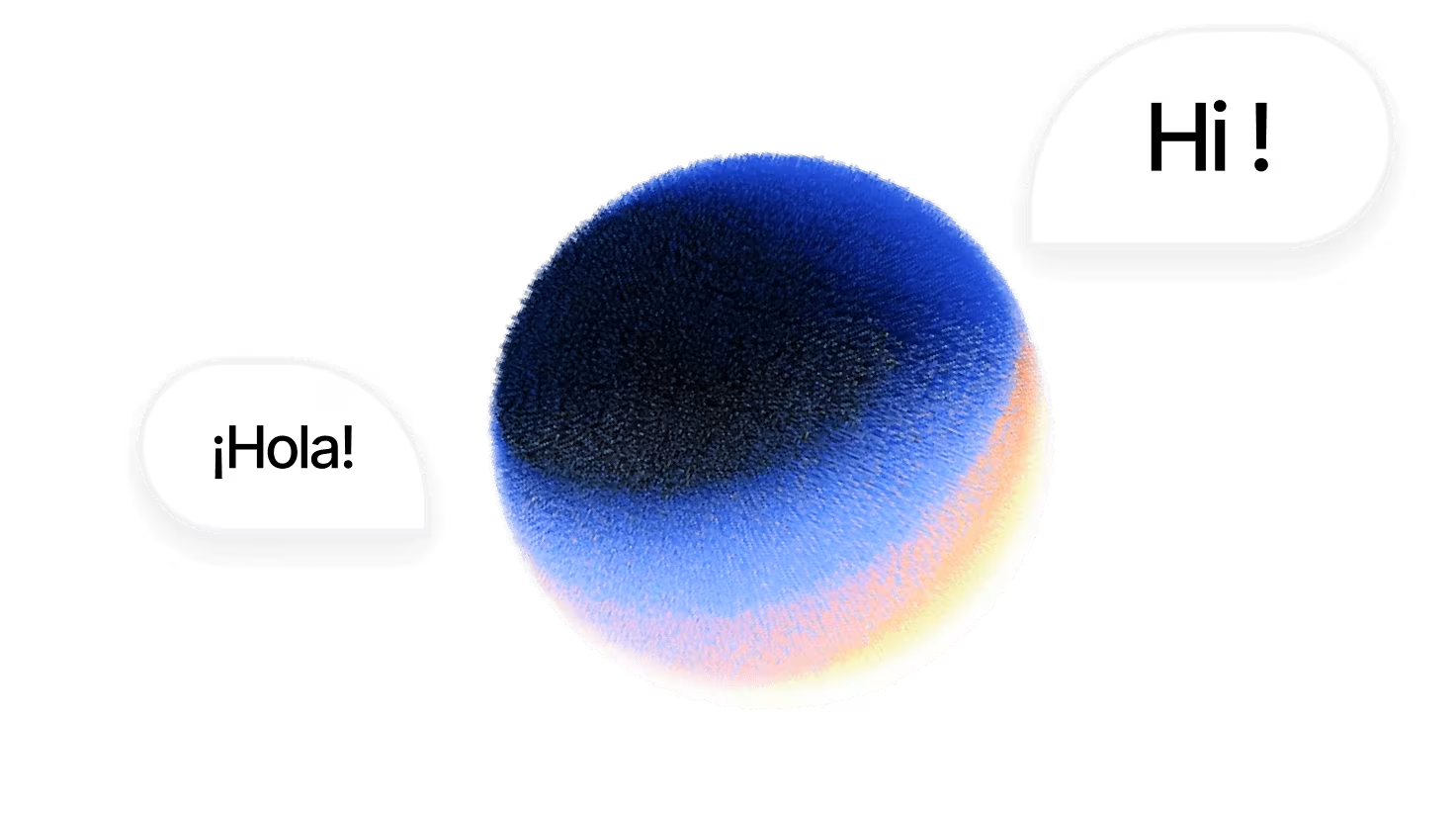
Clone a voice in English, speak in German — it sounds like a native German speaker. The voice identity stays. The foreign accent disappears. No other provider does this.
.png)
Pipe LLM tokens directly into our WebSocket. Audio starts generating before the sentence finishes. Every other provider buffers a full sentence. This eliminates 300–800ms of text buffer wait.
ElevenLabs needs 60+ seconds. Cartesia doesn't offer cloning. We clone from 6 seconds via dual conditioning — discrete codes for the LLM, continuous embeddings for the decoder.
2.5x cheaper than ElevenLabs Flash. 5x cheaper than Multilingual. No concurrency caps. No tiered latency penalties. Voice cloning included.
Full-duplex WebSocket. PCM, Opus, MP3, μ-law output. Built-in speed control. Clean barge-in — cancel/flush with zero trailing artifacts. 99.9% SLA.
First audio chunk in ~100ms (P90). Competitive with Cartesia Sonic-3 at a lower per-character price. 2x faster than Deepgram.
Built for production from day one
Ship in an afternoon
WebSocket API. Python & TypeScript SDKs. Drop-in compatible with the platforms you already use. Average integration time: 40 minutes.
Transparent TTS Pricing: How Palabra Stacks Up
We show where we win and where others lead. You decide what matters.





See what you'd save
Drag the slider to your monthly volume. Based on published API rates, not subscription estimates.
Start building today.
Developers ship faster with Palabra
Eight languages. Each trained to near-native.
55.4% WER improvement over baseline via GRPO training.












Built for production. Certified for compliance.
Cloud, self-hosted, or on-premises.


FAQ About Our Neural TTS
ElevenLabs optimizes for studio-quality English voice. Palabra is optimized for production voice agents — lowest latency, multilingual cloning with native accent, and transparent pricing.
Yes. Palabra TTS is available as a cloud API, self-hosted deployment, or on-premises installation. All options are ISO 27001-certified and GDPR-compliant. Your data never trains our models. Contact sales for self-hosted and on-premises options.
Average integration time is 40 minutes.
Every other TTS provider requires a complete sentence before synthesis starts — that buffer adds 300–800ms of dead air your users hear as lag. Palabra accepts LLM tokens as they stream and begins audio synthesis after just 2 words, while the LLM is still generating. At 35ms time-to-first-audio, Palabra is the fastest TTS in the world.
Just 6 seconds of reference audio. We use dual conditioning — discrete codes for the LLM and continuous embeddings for the decoder — to capture both voice identity and natural prosody without fine-tuning. ElevenLabs requires 60+ seconds; Cartesia doesn't offer cloning at all.
Most TTS engines carry the phonetic habits of a cloned voice into every language it speaks — so an English-cloned voice sounds foreign in German, even if the words are correct. Deaccenting separates voice identity (timbre, resonance, prosodic character) from accent, so the output sounds like a native speaker of the target language while still sounding like the original person.
$0.015 per minute, voice cloning included. No concurrency caps, no tiered latency penalties at volume. That's up to 5x cheaper than ElevenLabs Multilingual and 2x faster than Deepgram.

.svg)
